From Data to Decisions: How Refineries Can Turn Survey Responses into Actionable Insights
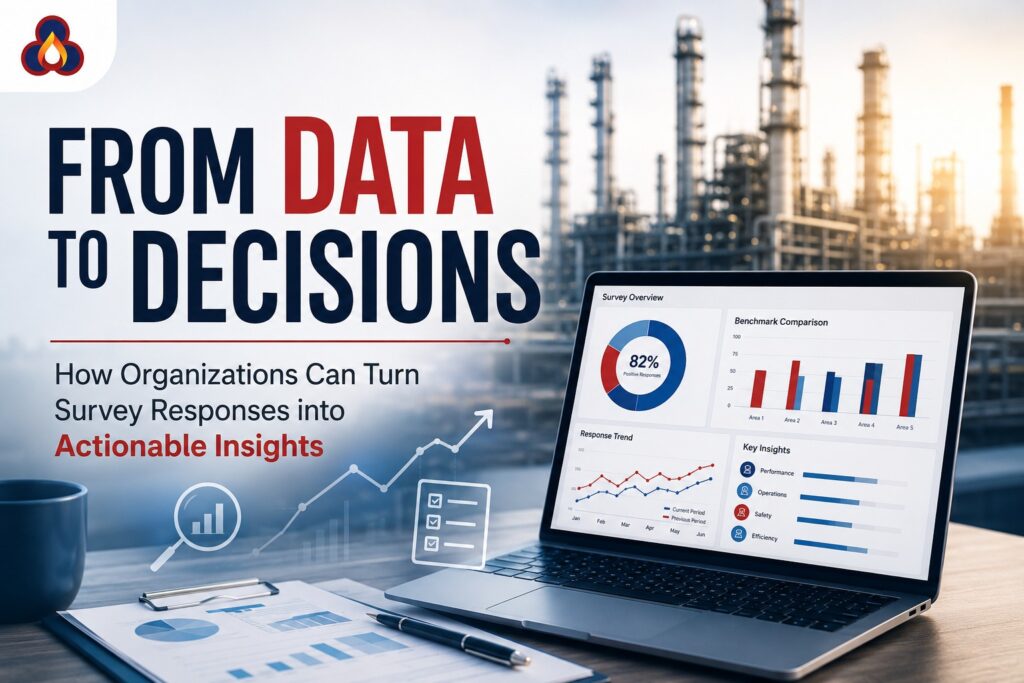
Every refinery generates data. Sensors monitor equipment, control systems capture process information, and operational reports measure performance. But one of the most valuable sources of information often comes from the people who work with these systems every day.
Surveys give refinery leaders a simple yet powerful way to understand what’s happening beyond operational dashboards. They capture insights from engineers, operators, maintenance teams, process specialists, and business leaders—revealing challenges, identifying improvement opportunities, and highlighting areas that numbers alone cannot explain.
A well-designed assessment can uncover gaps in digital adoption, process efficiency, collaboration, operational practices, and organizational readiness. In many cases, these insights help refineries prioritize improvement initiatives, avoid costly inefficiencies, and make better investment decisions.
The challenge isn’t collecting responses. Most organizations already have access to survey platforms. The real challenge is turning those responses into meaningful actions that improve refinery performance.
That’s where the journey from data to decisions truly begins.
Why Surveys Matter in Modern Refineries
But understanding why surveys matter is only the first step. To unlock their full value, it’s important to understand the role they play in today’s refining landscape.
Today’s refining industry operates in an increasingly complex environment. Plants are expected to improve profitability while maintaining safety, reliability, energy efficiency, environmental compliance, and operational excellence.
Technology continues to evolve rapidly, but successful transformation depends just as much on people, processes, and organizational maturity as it does on new digital solutions.
Surveys help refinery leaders understand questions such as:
- How prepared is the organization for digital transformation?
- Which operational practices need improvement?
- Where are teams facing the biggest challenges?
- Are different departments aligned on strategic priorities?
- Which initiatives should receive investment first?
While operational data explains what is happening, survey responses often explain why it is happening. Together, they provide a more complete picture, enabling refinery leaders to make informed decisions rather than relying on assumptions.
The Challenge: Plenty of Data, Limited Business Insight
While surveys provide valuable perspectives, collecting responses alone doesn’t create better outcomes. The real challenge begins after the feedback has been gathered.
Refineries already collect enormous amounts of operational data every second.
But operational data doesn’t always reveal:
- Whether employees are using digital tools effectively.
- How mature current business processes really are.
- Whether teams share the same understanding of operational priorities.
- Where organizational capabilities need strengthening.
- Which improvement initiatives will deliver the greatest value.
Many organizations conduct internal surveys, but the responses often remain in spreadsheets or presentation slides. Reports are generated, shared, and eventually forgotten.
Without a structured assessment framework, valuable insights never become business decisions. The opportunity lies not in collecting more data, but in making better use of the data that already exists.
Looking Beyond Individual Responses
This is why simply reviewing survey scores isn’t enough. Organizations need to dig deeper to uncover the insights hidden behind the numbers.
A survey may indicate that employees rate collaboration at 7.8 out of 10.
But that score alone doesn’t answer the important questions.
- Which departments are struggling?
- Why are collaboration scores lower in certain locations?
- How does the refinery compare with industry peers?
- Which capabilities should be strengthened first?
- Which improvements will create the biggest operational impact?
The real value of surveys lies in answering these questions—not simply calculating averages. Once organizations understand the story behind the responses, they are better equipped to make meaningful improvements.
Turning Survey Responses into Actionable Insights
Once organizations start asking the right questions, the next step is building a structured process that transforms those answers into meaningful action.
Every survey response represents valuable organizational knowledge. The goal is to transform that knowledge into practical improvements.
Bring All Feedback Together
It all starts with creating a complete picture of the organization.
Assessment responses often come from multiple stakeholders across the refinery, including:
- Operations
- Maintenance
- Process Engineering
- Reliability
- Digital Transformation
- Planning
- Commercial
- Leadership teams
Bringing these perspectives together provides a complete view of organizational performance rather than isolated departmental opinions.
Measure Organizational Maturity
Once all perspectives are brought together, the focus shifts from collecting opinions to understanding organizational capability.
Instead of measuring only satisfaction, refinery assessments should evaluate organizational capabilities.
Examples include:
- Digital maturity
- Process maturity
- Operational excellence
- Cross-functional collaboration
- Decision-making effectiveness
- Technology adoption
- Data utilization
- Continuous improvement culture
These indicators provide a clearer picture of where the organization stands today and where improvements are needed.
Find Patterns Across the Organization
Measuring capabilities is only part of the story. The greatest value comes from identifying patterns that emerge across teams, departments, and business functions.
Individual responses are helpful.
Patterns are transformational.
When multiple teams identify similar challenges—whether around data accessibility, workflow consistency, technology adoption, or collaboration—it becomes easier to prioritize initiatives that will create the greatest operational value.
This is how organizations move from survey data to informed business decisions.
Assessment Shows Where You Stand. Benchmarking Shows Where You Can Go.
Even the most detailed insights become more valuable when viewed in context. That’s where assessment and benchmarking make the difference.
Knowing your own results is valuable.
Knowing how they compare with similar refineries is even more powerful.
Assessment helps organizations understand their current level of maturity across critical business and operational areas.
Benchmarking adds context by comparing those results with industry peers and best-performing organizations.
Together, they answer three simple questions:
- Where are we today?
- How do we compare?
- What should we improve next?
These answers help refinery leaders prioritize investments with confidence instead of relying on assumptions.
Turning Insights into Better Decisions
Once organizations understand both their current performance and how they compare with others, they are in a much stronger position to make informed decisions.
Survey insights support decision-making across the refinery.
Leaders can use them to:
- Prioritize digital transformation initiatives.
- Improve operational workflows.
- Strengthen cross-functional collaboration.
- Identify capability gaps.
- Improve workforce readiness.
- Optimize business processes.
- Support continuous improvement programs.
- Allocate investments where they create the highest value.
When structured assessment data support every decision, organizations reduce uncertainty, improve execution, and maximize the value of every improvement initiative.
Building a Culture of Continuous Improvement
Of course, no single assessment can capture an organization’s entire journey. The greatest benefits come when feedback becomes part of an ongoing improvement process.
The most successful refineries don’t conduct assessments only once.
They establish a continuous improvement cycle.
- Gather insights across the organization.
- Assess operational and organizational maturity.
- Benchmark against industry peers.
- Identify improvement opportunities.
- Implement targeted initiatives.
- Measure progress.
- Repeat regularly.
Each cycle provides better visibility into organizational performance, helping refinery leaders make increasingly informed decisions while continuously improving operations.
Conclusion
Ultimately, the goal isn’t simply to understand the present—it’s to build a stronger future using every insight that survey data provides.
For modern refineries, surveys are much more than questionnaires. They provide a structured way to understand organizational capabilities, identify improvement opportunities, and support strategic decision-making.
The organizations that achieve lasting operational excellence are not those collecting the most feedback—they are the ones transforming feedback into action. By combining structured assessments with benchmarking and analytics, refinery leaders can confidently move from data to decisions, ensuring every insight contributes to safer operations, stronger performance, higher efficiency, and continuous improvement.
Collecting survey responses is only the beginning. The real value comes from understanding what those responses reveal about your refinery and using those insights to drive measurable improvements.
If you’re looking to assess your refinery’s operational maturity, benchmark your performance against industry peers, and identify opportunities for continuous improvement, a structured assessment can provide the clarity you need.
Explore our Blend Assessment & Benchmarking Survey to gain actionable insights, understand where your organization stands today, and build a roadmap for stronger operational performance tomorrow.
About the Author